
Shogun 2 Fall of the Samurai Guide: Guns and Reform
Learn Fall of the Samurai campaign basics: reliable gun lines, measured modernization, naval threats and allegiance choices before the endgame.
FAQ
Does choosing the Emperor mean I must modernize?
Should a beginner declare an independent republic?
Does the Sengoku food guide apply to Fall of the Samurai?
Is Fall of the Samurai included in Complete Edition?
Learn the firing line before buying elite troops
Fall of the Samurai brings the campaign into nineteenth-century warfare. Rifles and artillery change what a safe approach looks like. A force that charges bravely across open ground may lose before its swords reach the target.
Begin with an army whose tasks you can follow. Gun infantry needs a usable line of fire; a reserve or melee detachment protects gaps and flanks. Artillery needs room and protection rather than a place directly behind friendly troops that block its shots. Read the unit cards before assuming that every infantry regiment with a firearm has the same accuracy or battlefield role.
In a practice battle, watch the ground between the unit and target. A crest, friendly regiment or awkward angle can make an impressive-looking line ineffective. Move deliberately, keep a reserve uncommitted, and change formation when the terrain demands it. The army composition guide explains role selection; its Sengoku examples are not a fixed Fall roster.
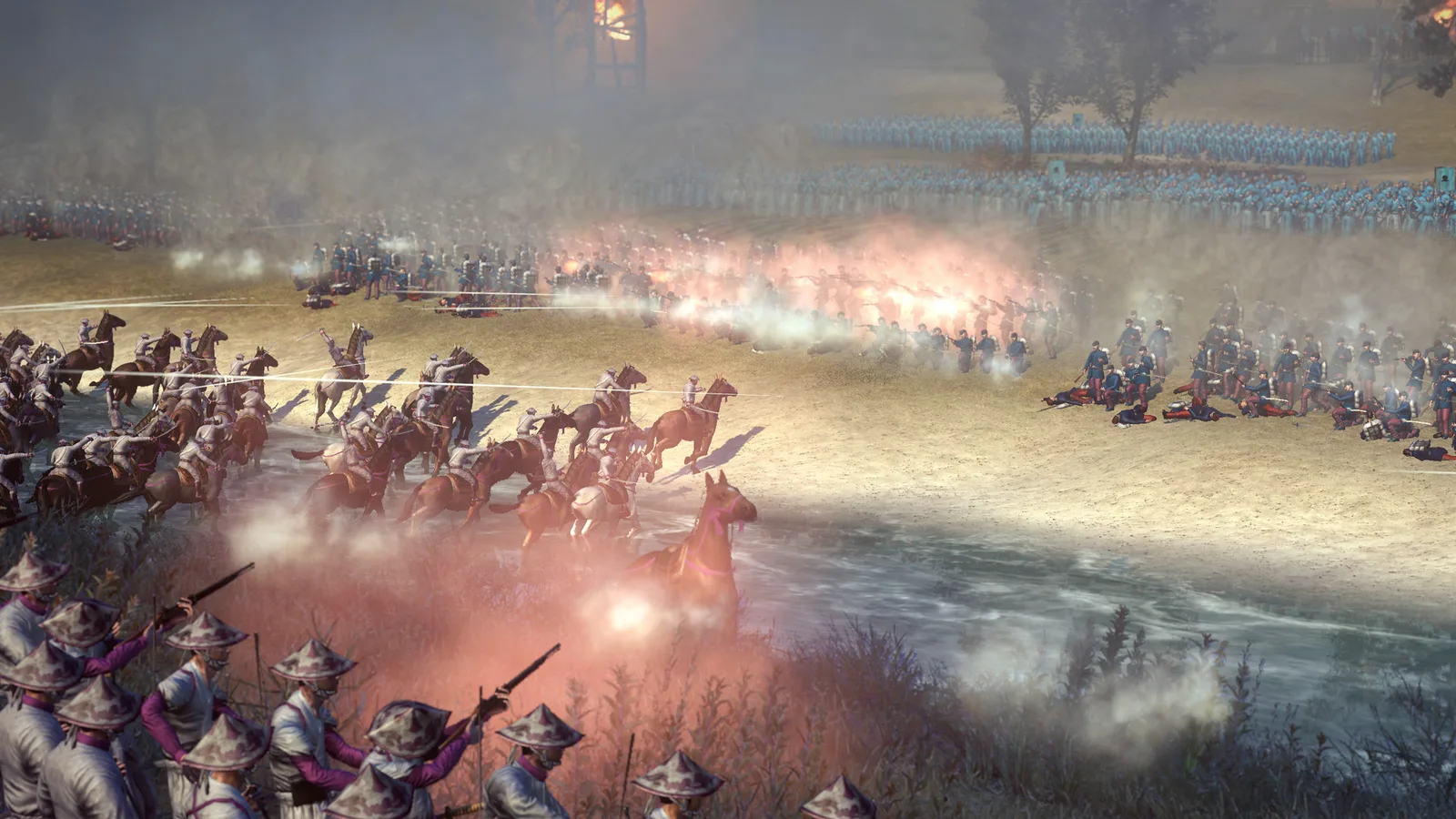
Classic Fall rifle troops illustrate the value of open firing lanes; this frame does not establish a particular regiment’s accuracy.
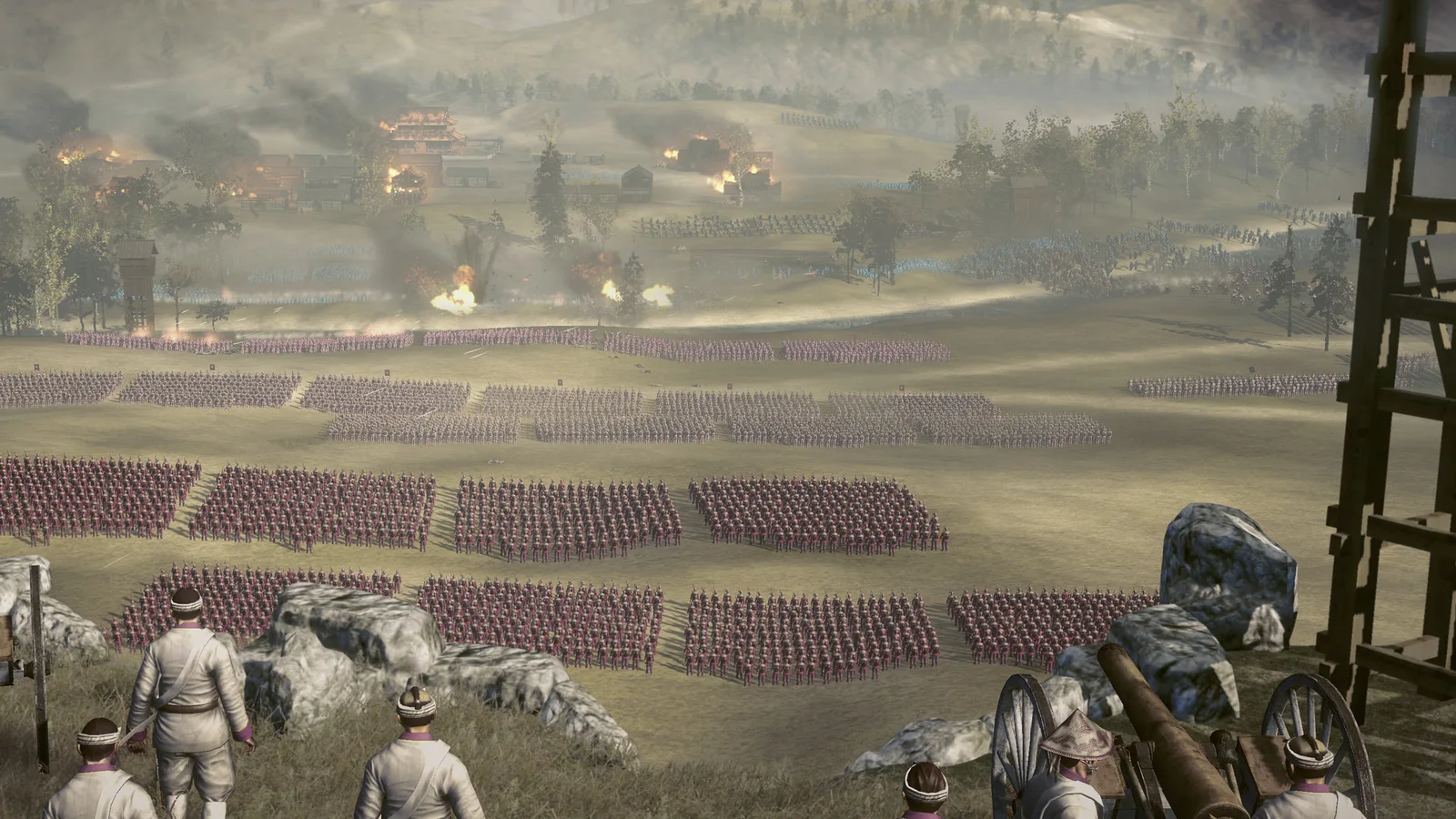
Classic artillery battle: consider the gun’s position and nearby troops before committing it to an engagement.
Modernize at a pace you can hold
Development opens new military options but can also increase unrest. Before another modern building or research push, inspect province order and consider what happens when the army leaves. A garrison used to suppress unrest cannot simultaneously march with the main force.
Do not treat modern and traditional as moral or political labels. Supporting the Shogun does not require an all-samurai army, and supporting the Emperor does not automatically solve modernization. Decide what your military needs, then fund the infrastructure that supports it.
When income is tight, prioritize one useful change over several unfinished ambitions. Upgrading a recruitment center can be valuable if it produces troops for the current frontier. Building a fleet you cannot maintain while also expanding inland creates two funding problems instead of one.
The Sengoku economy page teaches budget discipline, but its food-consuming castle and market plan must not be copied into this campaign.
Account for the coastline
A safe land frontier does not make a port safe. Watch hostile fleets, coastal movement and the income tied to exposed ports. Consider where a landing would force your main army to turn back.
Suitable fleets can support land operations, but bombardment is not a precision substitute for positioning your troops. Keep your own units away from the intended fire area and consider whether the enemy can move before the shells arrive. If a target is poor, preserving the ability can be more useful than spending it as soon as the button appears.
Railways can improve movement where the campaign permits them. Do not assume a station can be built in any town or that an enemy cannot disrupt the route. Defend transport infrastructure as part of the frontier it serves.
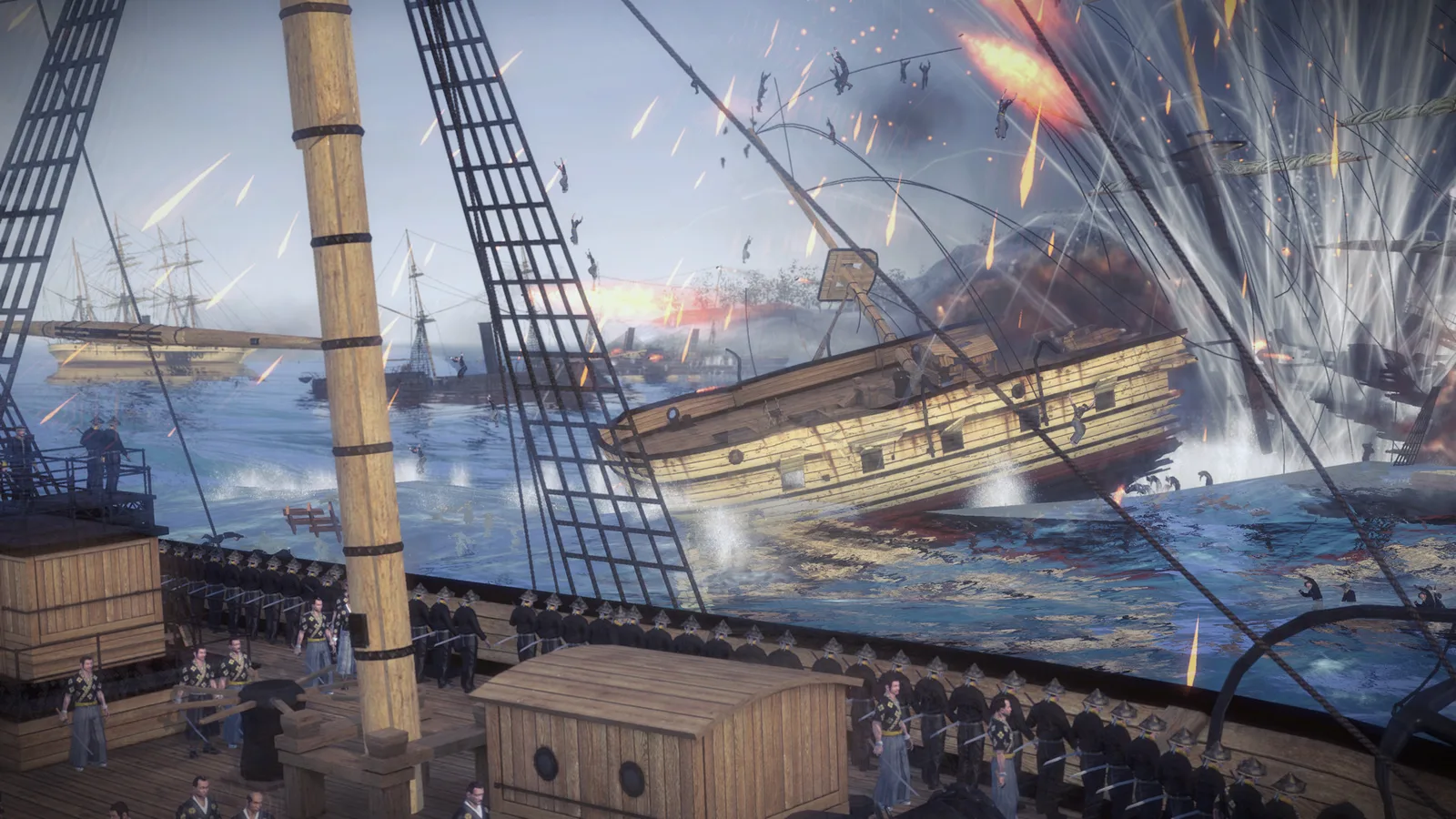
Classic naval combat illustrates the risks around coastal operations. The ship’s exact class is not identified here.
Make allegiance an endgame plan
Monitor clan fame while you expand. The political choice between backing an allegiance and becoming independent should happen after you have looked at likely opponents, stable income and reinforcement routes.
Independence is attractive as a challenge; it is less attractive as a surprise that catches an exhausted army far from home. Prepare your provinces and army before taking on a wider set of enemies. The Realm Divide guide addresses classic Sengoku separately: it should not replace Fall’s own allegiance rules.
If your immediate goal is learning the campaign, keep the number of active fronts manageable and make each victory sustainable. The beginner checklist covers that decision habit. Check your selected clan’s actual victory conditions rather than assuming that taking Kyoto alone completes the campaign.
Sources and edition scope
The official Fall manual documents modernization, allegiance, railways and naval support. The Complete Edition FAQ confirms the expansion is included; the official changes also correct infantry fatigue. This is classic campaign guidance, not a Complete Edition benchmark or tested difficulty exploit. Compare Rise of the Samurai for the earlier family-and-agent campaign.
Screenshots: Creative Assembly / SEGA via the official Fall Steam store. These show the original expansion, not Complete Edition.
Related Articles
guides
Shogun 2 Beginner Guide: Your First Campaign Opening
Start your first Shogun 2 campaign with a manageable clan, affordable army and food surplus. Learn when to expand and how Complete Edition differs.
guides
Shogun 2 Complete Edition: Price, Discount & Is It Worth It?
Compare Shogun 2 Complete Edition with the original: price, Steam loyalty discount, all three campaigns, new features and mod compatibility.
guides
Shogun 2 Economy Guide: Food, Taxes and Steady Income
Build a resilient Shogun 2 Sengoku economy: protect food surplus, manage tax and upkeep, and prepare for trade disruption before Realm Divide.
Was this helpful?
Thanks for the feedback!